
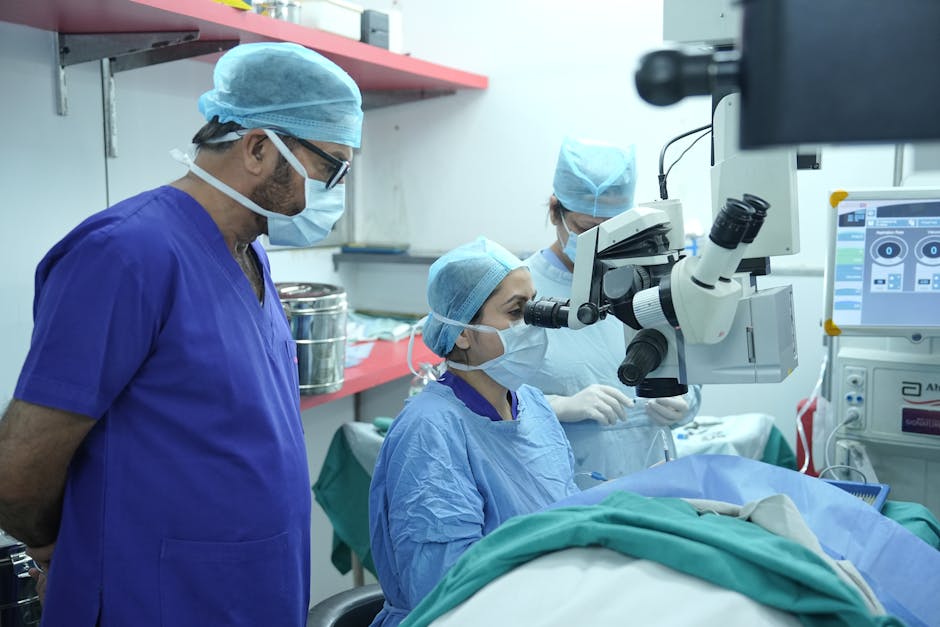
 Photo from Pexels
Originally Posted On: https://bluefinvision.com/blog/icl-surgery-checklist/
The Essential Checklist of Questions to Ask Before Your ICL Surgery Consultation
Most ICL consultations begin in the wrong place: which lens should I have, how much does it cost, and how quickly can I be treated? These are understandable questions. They are not the right ones.
Implantable Collamer Lens surgery, ICL, or phakic intraocular lens surgery, places a surgically implanted lens inside the eye, in the posterior chamber between the posterior iris surface and the anterior face of the natural crystalline lens, without removing any ocular tissue. Unlike laser eye surgery, the procedure is reversible in principle. Unlike cataract surgery, it is performed on a healthy eye with a functioning natural lens. ¹ ²
That framing matters. Elective surgery on a healthy organ demands a correspondingly high standard of clinical judgement, surgical environment, and ongoing surveillance. The lens will remain in the eye indefinitely, potentially for decades, and the questions you ask before surgery determine the quality of the system within which you will be managed for all of that time.
The checklist that follows is intended to help patients evaluate whether the surgeon, clinic, and clinical pathway they are considering meet the standard that a permanent implant requires.
How to Use This Checklist
This document is structured to help you prepare for your ICL consultation. The pre-operative assessment should be a clinical evaluation, not a conversion appointment. A thorough workup includes anterior segment OCT, corneal topography, detailed refraction, and, critically, measurement of the anterior chamber depth and white-to-white diameter. These determine whether an ICL is safe and, if so, which size will achieve the correct vault. ³
A responsible ICL consultation frequently ends with the recommendation not to operate. Patients with insufficient anterior chamber depth, marginal endothelial cell counts, or anatomical features that place the natural lens at risk may be better served by an alternative refractive pathway.
You may wish to:
- Print this checklist and bring it to your appointment
- Research specific questions using your surgeon’s website or the Royal College of Ophthalmologists’ register before attending
- Use the Plain English summaries if the clinical terminology feels unfamiliar
- Discuss any concerns openly with your surgical team before signing consent
1. Questions About Your Surgeon
The surgeon is the most important variable in your outcome. ICL implantation is a posterior chamber microsurgical procedure requiring precise lens sizing, accurate positioning, and the clinical judgement to manage intraoperative variables without disturbing the natural lens. ⁴
Is your surgeon on the GMC Specialist Register?
The General Medical Council Specialist Register confirms completion of a recognised ophthalmology training programme and eligibility to practise as a consultant. ICL surgery can in principle be performed by practitioners who have not completed full specialist training. The Specialist Register is the baseline credential patients should verify. ⁵
Plain English: Check that your surgeon is a fully qualified eye specialist registered with the General Medical Council – not simply a licensed medical practitioner with refractive surgery permissions.
Does your surgeon hold the CertLRS qualification?
The Certificate in Laser Refractive Surgery (CertLRS), awarded by the Royal College of Ophthalmologists, covers phakic IOL surgery as well as laser refractive procedures. It requires structured training, audit submission, and formal assessment. Its absence is a meaningful gap in credentialing for any surgeon offering ICL surgery. ⁶
Plain English: Ask whether your surgeon holds the RCOphth refractive surgery certificate – a specific postgraduate qualification beyond general ophthalmology training.
How many ICL procedures has your surgeon performed, and how many per year?
Volume is a recognised proxy for surgical consistency in phakic IOL practice, with higher-volume surgeons demonstrating more predictable refractive and vault outcomes across a large case series. ⁴ Beyond any headline number, the more important question is whether your surgeon can show you outcome data – refraction results, vault measurements, and complication rates – from their own practice.
Plain English: Ask how many ICL procedures your surgeon has performed in total, how many they do per year, and whether they can show you audited outcome data.
2. Questions About the Clinic
ICL surgery is a sterile intraocular procedure. The clinical environment carries the same infection-control requirements as cataract or vitreoretinal surgery – it cannot safely be conducted in a non-standard clinical setting.
Where is the surgery performed?
At Blue Fin Vision®, ICL surgery is performed in fully equipped positive-pressure hospital theatres with laminar or ultra-clean airflow, meeting the ventilation standards for intraocular surgical environments set out in Health Technical Memorandum 03-01. ⁷ Operating outside a compliant theatre environment carries an elevated risk of endophthalmitis – a rare but potentially sight-threatening intraocular infection. ⁸
Plain English: Ask whether your surgery will take place in a regulated hospital theatre meeting published ventilation standards for intraocular surgery – not a laser treatment room or minor procedures suite.
What is your endothelial cell count, how often will it be checked, and is monitoring included in the price?
The corneal endothelium maintains corneal transparency by actively pumping fluid from the stroma. Endothelial cells do not regenerate; any loss is permanent. Pre-operative endothelial cell density below a safe threshold is a contraindication to ICL surgery, and ongoing post-operative monitoring allows early detection of unexpected cell loss before it reaches clinically significant levels. ⁹
At Blue Fin Vision®, annual endothelial cell count (ECC) and vault measurements are included in post-operative follow-up without additional charge for the life of the implant.
Plain English: Ask what your pre-operative endothelial cell count is, how often it will be measured after surgery, and whether those monitoring appointments are included in the price.
What vault are you targeting, and how will you manage it if it is too high or too low?
Vault – the axial distance between the posterior surface of the ICL and the anterior surface of the natural crystalline lens – is the most critical anatomical variable in ICL surgery. Insufficient vault risks cataract formation through chronic lens contact. Excessive vault risks elevated intraocular pressure through pupil block and may compromise endothelial health through impaired aqueous circulation. ¹⁰ ¹¹
The surgeon should have a clearly articulated target vault range and a defined strategy for cases outside acceptable limits, which may include lens exchange for a different size.
Plain English: Ask what vault your surgeon is planning for, what the acceptable range is, and what they would do if your vault was too high or too low after surgery.
Does the clinic have access to laser eye surgery for enhancement if residual ametropia remains?
A proportion of patients will have residual refractive error after ICL implantation. Enhancement by excimer laser applied on top of the implant is a well-established strategy for addressing this. ¹⁶ Clinics without in-house laser platforms must refer patients elsewhere, potentially to a different surgeon without access to the original pre-operative baseline. In-house laser capacity ensures continuity of clinical responsibility.
Plain English: Ask whether the clinic can perform laser eye surgery to refine your result if needed, or whether you would be referred elsewhere.
Which ICL system do you use, and how are measurements obtained to calculate lens power and size?
The EVO Visian ICL manufactured by STAAR Surgical has the most extensive published long-term safety and efficacy dataset of any phakic IOL, with peer-reviewed outcome data from the multicentre ITM study demonstrating stable refractive results and acceptable endothelial cell loss over five years of follow-up. ¹⁴ The current EVO+ generation incorporates a central port that maintains aqueous circulation without requiring peripheral iridotomy – a clinically meaningful improvement over earlier designs. ¹⁵
Lens sizing requires accurate anterior segment biometry including anterior chamber depth and white-to-white diameter. At Blue Fin Vision®, the STAAR Surgical STELLA calculator is used for all ICL sizing and power calculations, with results fed into an ongoing audit to allow data-driven refinement of outcomes over time.
Plain English: Ask which ICL system is used, which calculator is used for sizing, and how the clinic audits its refractive outcomes.
Companion article: This checklist focuses on the clinical questions to ask before committing to ICL surgery. For a detailed breakdown of how ICL surgery pricing works and what each level of care includes, see our companion article: What Does ICL Surgery Cost in the UK?
3. Questions About Complication Management
ICL surgery has a favourable complication profile across a large published evidence base. Understanding the complication landscape nonetheless allows patients to identify problems early, seek timely review, and approach the long-term management pathway with realistic expectations.
What happens if I develop a cataract, and when?
Cataract formation is the most clinically significant long-term risk associated with ICL surgery. Where it occurs, the pattern is typically anterior subcapsular, reflecting proximity of the implant to the anterior lens surface; risk is elevated by suboptimal vault and insufficient aqueous circulation. ¹² ¹³ The timing of cataract development determines the clinical and financial pathway:
- Within 2 years of surgery: covered completely under the Blue Fin Advantage package at no additional cost to the patient.
- Years 2–10: most likely to be managed with conversion to lens replacement surgery. Blue Fin Advantage covers 50% of the lens replacement cost in this window.
- Year 10 and beyond: increasingly indistinguishable from natural age-related lens change and charged at standard lens replacement rates.
Plain English: Ask what the financial arrangement is if a cataract develops, and get the specific terms for each time period in writing.
Have you performed cataract surgery in an eye with an existing ICL, and how do you manage the biometry?
Phacoemulsification in an eye with a phakic IOL in situ is technically more demanding than standard cataract surgery: the ICL typically requires removal first, and biometric calculation for the replacement lens must account for the refractive history of the eye. Patients should ask whether their surgeon has actually done this – not simply whether they are aware of it in principle.
At Blue Fin Vision®, cataract surgery has been performed in eyes with existing ICLs using modern swept-source OCT biometry and validated post-refractive formulas. Some of these patients had also previously undergone laser enhancement – meaning the full sequence of ICL implantation, cataract surgery, and laser enhancement has been managed within the same practice.
Plain English: Ask whether your surgeon has personally performed cataract surgery in eyes with ICLs, and how they manage the biometry calculation for the replacement lens.
What happens if myopia continues to progress after ICL implantation?
ICL surgery corrects the refractive error present at the time of surgery; it does not halt progression. Patients with incomplete refractive stability, particularly younger patients, may experience additional myopic shift after implantation. ¹⁸
At Blue Fin Vision®, laser eye surgery within the first year of ICL implantation is included in the enhancement pathway at no additional cost. After one year, a 30% discount on laser correction is offered for up to two years from the original procedure, after which laser surgery is available at standard rates.
Plain English: Ask what the plan is if your prescription changes after surgery, and whether laser correction for progression is included or discounted.
4. Questions About Enhancement
An enhancement – a second procedure to refine the outcome of the first – should be discussed explicitly before primary surgery. For ICL patients, this most commonly means excimer laser correction applied to residual ametropia after the implant is in place.
What is the threshold for enhancement, and when is it typically offered?
At Blue Fin Vision®, the threshold for enhancement consideration is a residual refractive error of 1.00 dioptre or more combined with a patient-reported functional concern. Enhancement is not offered until refraction has been stable for a minimum of three to four months – allowing the eye to settle fully before secondary intervention. ¹⁶
Plain English: Ask at what prescription level enhancement would be considered, and how long you would wait after surgery before it could be performed.
Who performs the enhancement, and is it covered?
Enhancement should be performed by the same consultant who performed the original procedure, or at minimum by a surgeon with full access to the pre-operative data and operative record. Enhancement by a different clinician who has not seen the original measurements introduces unnecessary uncertainty.
At Blue Fin Vision®, enhancement within the first 12 months of ICL surgery is included under the Blue Fin Advantage package at no additional cost. Laser correction between one and two years is offered at a 30% reduction from standard rates. After two years, laser correction is charged at full price.
Plain English: Ask who performs enhancements, whether it is always the same surgeon, what the time window for included treatment is, and what the arrangement is if enhancement is needed after that window.
5. Informed Consent
ICL surgery is an elective procedure performed on a healthy eye. The legal and ethical standard for consent in this context is correspondingly demanding.
Montgomery v Lanarkshire Health Board UKSC 11 established that the UK standard of informed consent is patient-centred rather than clinician-centred: surgeons must disclose the risks that a reasonable patient in that patient’s position would consider material, regardless of how common or uncommon those risks are. ¹⁹ For elective refractive surgery, where the patient has no pathology that makes surgery necessary, this standard requires that cataract risk, endothelial cell loss, vault-related complications, and the long-term surveillance commitment are all discussed explicitly, not merely listed on a form.
Consent for ICL surgery should not be a document presented on the day of the procedure. It should be a process completed during the pre-operative assessment, with time for questions, reflection, and if necessary a second opinion before any commitment is made.
Plain English: Your consent information should be given to you before the day of surgery, not handed to you in the treatment room. If it is presented at the last moment, that is a governance concern.
6. Questions About Anxiety and Comfort
ICL surgery is performed on an awake patient under topical anaesthetic eye drops. The procedure typically takes under 15 minutes per eye, but the experience of a surgical environment – bright lights, speculum insertion, the awareness of instruments near the eye – can be profoundly anxiety-provoking for patients who have not previously undergone ocular surgery.
Anxiety management is not a peripheral concern: a patient who moves unexpectedly during lens insertion risks precisely the intraoperative complication that careful preparation is designed to avoid.
Is sedation available, and what does it cost?
Intravenous sedation administered by an anaesthetist provides the most reliable anxiolytic effect for ICL surgery. It does not produce general anaesthesia but significantly reduces patient awareness and movement risk, and in the Blue Fin Vision® experience it produces the best overall result for anxious patients.
At Blue Fin Vision®, IV sedation is available at a cost of £500. For patients who prefer oral pharmacological support, oral diazepam can be prescribed in advance and is provided without additional charge. This must be arranged before the day of surgery – it cannot be organised on the day.
Plain English: If you are anxious about surgery, ask what sedation options are available and what each costs. Oral diazepam or IV sedation should be discussed at your pre-operative appointment, not on the day.
7. Questions for Patients Travelling to Surgery
An increasing number of patients travel, domestically or internationally, for ICL surgery, drawn by specific surgeon reputations, outcome data, or the absence of suitable provision locally. Travel is clinically possible but requires careful advance planning.
What is the minimum stay required near the surgical centre?
ICL surgery requires day-one and week-one in-person review as a minimum. Vault and intraocular pressure monitoring in the early post-operative period is particularly important – elevated pressure and pupil block can occur in the days following surgery and require prompt clinical assessment. ¹¹ A minimum stay of one week near the surgical centre is therefore required for all travelling patients.
At Blue Fin Vision®, the standard pathway for travelling patients includes a video consultation in advance, face-to-face consultation and scans on the day of surgery, the procedure, a day-one review, and a one-week in-person follow-up – before transition to a named local ophthalmologist identified before surgery and copied into all clinical correspondence from the outset.
Plain English: Plan to remain near the clinic for at least one week after surgery. Confirm in advance that the clinic will identify and contact a local eye specialist on your behalf, and get that arrangement in writing before you book.
Who will manage post-operative care in my home region?
The local clinician managing your follow-up needs full access to the operative record, pre-operative measurements, ICL size and power, vault data, and intraocular pressure history. A well-organised centre formalises this relationship before surgery – not after a complication has arisen. Annual surveillance including vault measurement and ECC is a lifelong requirement for ICL patients and must be structured whether or not you remain near the original surgical centre.
Plain English: Before travelling for surgery, confirm that the clinic will arrange a named local ophthalmologist for your ongoing follow-up and annual surveillance.
Conclusion
ICL surgery performed within a well-governed clinical pathway is an excellent refractive option for patients who are not candidates for laser eye surgery, particularly those with high myopia, thin corneas, dry eye disease, or lifestyle requirements that favour a flapless, reversible approach. The evidence base for the EVO Visian ICL is mature, with long-term peer-reviewed data demonstrating stable refractive outcomes and an acceptable endothelial cell loss profile in appropriately selected patients. ¹⁴ ¹⁷
The questions in this checklist are not designed to challenge your surgeon. They are designed to help you identify the right one, and to recognise the difference between a clinical environment that has genuine systems in place for every scenario described above, and one that has not anticipated questions it has not yet been asked.
The best clinicians welcome detailed pre-operative enquiry. They regard thorough informed consent as a clinical obligation rather than a regulatory formality. If a clinic finds these questions inconvenient, that is important information.
See what our patients say about their experience on our Wall of Love.
Blue Fin Vision® ICL Surgery Checklist
Questions to Ask Before ICL Surgery
Questions About Your Surgeon
- Are you on the GMC Specialist Register for Ophthalmology?
- Do you hold the CertLRS qualification?
- How many ICL procedures have you performed in total, and how many do you do each year?
- Can you show me audited outcome data from your own practice?
Questions About the Clinic
- Is surgery performed in a regulated hospital theatre meeting HTM 03-01 ventilation standards?
- What is my pre-operative endothelial cell count?
- How often will ECC and vault be monitored after surgery, and is this included in the price?
- What vault are you targeting, and how will you manage it if it is too high or too low?
- Does the clinic have access to laser eye surgery for enhancement if needed?
- Which ICL system and sizing calculator do you use?
Questions About Complications
- What happens if I develop a cataract within two years of surgery?
- What is the arrangement if cataract develops between two and ten years?
- Have you personally performed cataract surgery in an eye with an existing ICL?
- How do you manage biometry calculations in post-ICL eyes?
- What happens if my myopia continues to progress after surgery?
Questions About Enhancement
- At what level of residual prescription would enhancement be recommended?
- When after surgery would enhancement typically be performed?
- Who performs the enhancement – the same consultant?
- Is laser enhancement included in the price, and for how long?
Questions About Consent
- Will I receive written information about material risks before the day of surgery?
- Is there time to ask questions and seek a second opinion before signing consent?
Questions About Anxiety and Comfort
- Is IV sedation available, and what does it cost?
- Is oral diazepam available for anxious patients, and is there a charge?
Questions for Travelling Patients
- What is the minimum stay required near the clinic after surgery?
- Will you identify a named local ophthalmologist before surgery for ongoing follow-up?
- How will annual vault and ECC monitoring be arranged if I live far away?
References
- Packer M. Meta-analysis and review: effectiveness, safety, and central port design of the intraocular collamer lens. Clin Ophthalmol. 2016;10:1059–1077.
- Fernandes P, González-Méijome JM, Madrid-Costa D, Ferrer-Blasco T, Jorge J, Montés-Micó R. Implantable collamer posterior chamber intraocular lenses: a review of potential complications. J Refract Surg. 2011;27(10):765–776.
- Kamiya K, Shimizu K, Igarashi A, Komatsu M. Evaluation of anterior segment biometry for phakic intraocular lens sizing using the STAAR Visian ICL. J Cataract Refract Surg. 2009;35(3):522–526.
- Barsam A, Bhogal M, Morris S, et al. Posterior chamber phakic intraocular lens insertion for myopia and myopic astigmatism. Cochrane Database Syst Rev. 2012;6:CD008259.
- General Medical Council. The Specialist Register. London: GMC; 2024. Available from: https://www.gmc-uk.org/registration-and-licensing/the-medical-register
- Royal College of Ophthalmologists. Certificate in Laser Refractive Surgery (CertLRS): Requirements and Curriculum. London: RCOphth; 2020.
- NHS England. Health Technical Memorandum 03-01: Specialised ventilation for healthcare premises. Part A: Design and validation. London: NHS England; 2023.
- Endophthalmitis Vitrectomy Study Group. Results of the Endophthalmitis Vitrectomy Study: a randomized trial of immediate vitrectomy and of intravenous antibiotics for the treatment of postoperative bacterial endophthalmitis. Arch Ophthalmol. 1995;113(12):1479–1496.
- Igarashi A, Shimizu K, Kato S, Kamiya K. Posterior chamber phakic intraocular lens and corneal endothelium: 5-year follow-up. J Cataract Refract Surg. 2009;35(3):488–492.
- Gonvers M, Bornet C, Othenin-Girard P. Implantable contact lens for moderate to high myopia: relationship of vaulting to cataract formation. J Cataract Refract Surg. 2003;29(5):918–924.
- Sanchez-Galeana CA, Smith RJ, Sanders DR, et al. Lens opacities after posterior chamber phakic intraocular lens implantation. Ophthalmology. 2003;110(4):781–785.
- Sanders DR. Anterior subcapsular opacification with the implantable contact lens. J Refract Surg. 2003;19(4):415–422.
- Zaldívar R, Davidorf JM, Oscherow S. Posterior chamber phakic intraocular lens for myopia of –8 to –19 dioptres. J Refract Surg. 1998;14(3):294–305.
- Kohnen T, Maxwell WA, Holland S, Tetz M. Intraocular collamer lens for high myopia: results from the ICL in Treatment of Myopia (ITM) study. Ophthalmology. 2008;115(8):1392–1400.
- Vukich JA, Durrie DS, Pepose JS, Thompson V, van de Pol C, Lin L. Evaluation of the EVO/EVO+ Visian ICL with central port design: the pivotal clinical trial. Clin Ophthalmol. 2018;12:1541–1547.
- Ganesh S, Brar S. Clinical outcomes of phakic intraocular lens implantation for the correction of high myopia with three years of follow-up. Clin Ophthalmol. 2013;7:2011–2021.
- Sanders DR, Vukich JA. Comparison of implantable contact lens and laser-assisted in situ keratomileusis for moderate to high myopia. Cornea. 2003;22(4):324–331.
- Kamiya K, Shimizu K, Igarashi A, Komatsu M. Four-year follow-up of posterior chamber phakic intraocular lens implantation for moderate to high myopia. Arch Ophthalmol. 2009;127(7):845–850.
- Montgomery v Lanarkshire Health Board UKSC 11. United Kingdom Supreme Court.
ABOUT THE AUTHOR
Mr Mfazo Hove
Consultant Ophthalmic Surgeon
MBChB MD FRCOphth CertLRS
Mr Hove is a consultant ophthalmic surgeon who has performed more than 57,000 procedures. His training includes 6.5 years of specialist development at Moorfields Eye Hospital, followed by five years as a consultant at the Western Eye Hospital (Imperial College Healthcare NHS Trust). He is a consultant at Blue Fin Vision®, an elite ophthalmology clinic serving London, Essex and Hertfordshire, working alongside an experienced clinical team delivering comprehensive ophthalmic care. He specialises in cataract surgery and advanced vision correction, including laser procedures, lens replacement and implantable Collamer lenses (ICL).
Book Your ICL Surgery Consultation
If you are considering ICL surgery, Blue Fin Vision® provides consultant-led care with NOD-audited outcomes across London, Hertfordshire, and Essex, including Harley Street, Weymouth Street, Chelmsford, Hatfield, and Chase Lodge Hospital. Book a consultation to discuss your ICL surgery options with Mr Hove and his team.
